Alta Quota
Breguet: Two Centuries of Defying Gravity
The Alta Quota Experience: From 7–20 October in Paris, step beyond the doors of Breguet’s Place Vendôme boutique for an exceptionally private encounter with the Maison and its 225-year Tourbillon legacy. As part of its worldwide presentation tour, discover the Tourbillon collection during its Paris stop, before being invited further into Breguet’s world: its Métiers d’Art, private heritage collection and, most exceptionally, its historic archives, preserving extraordinary records connected to figures such as Marie-Antoinette, Napoleon Bonaparte and Winston Churchill.
Available exclusively through Alta Quota, upon private request and subject to availability
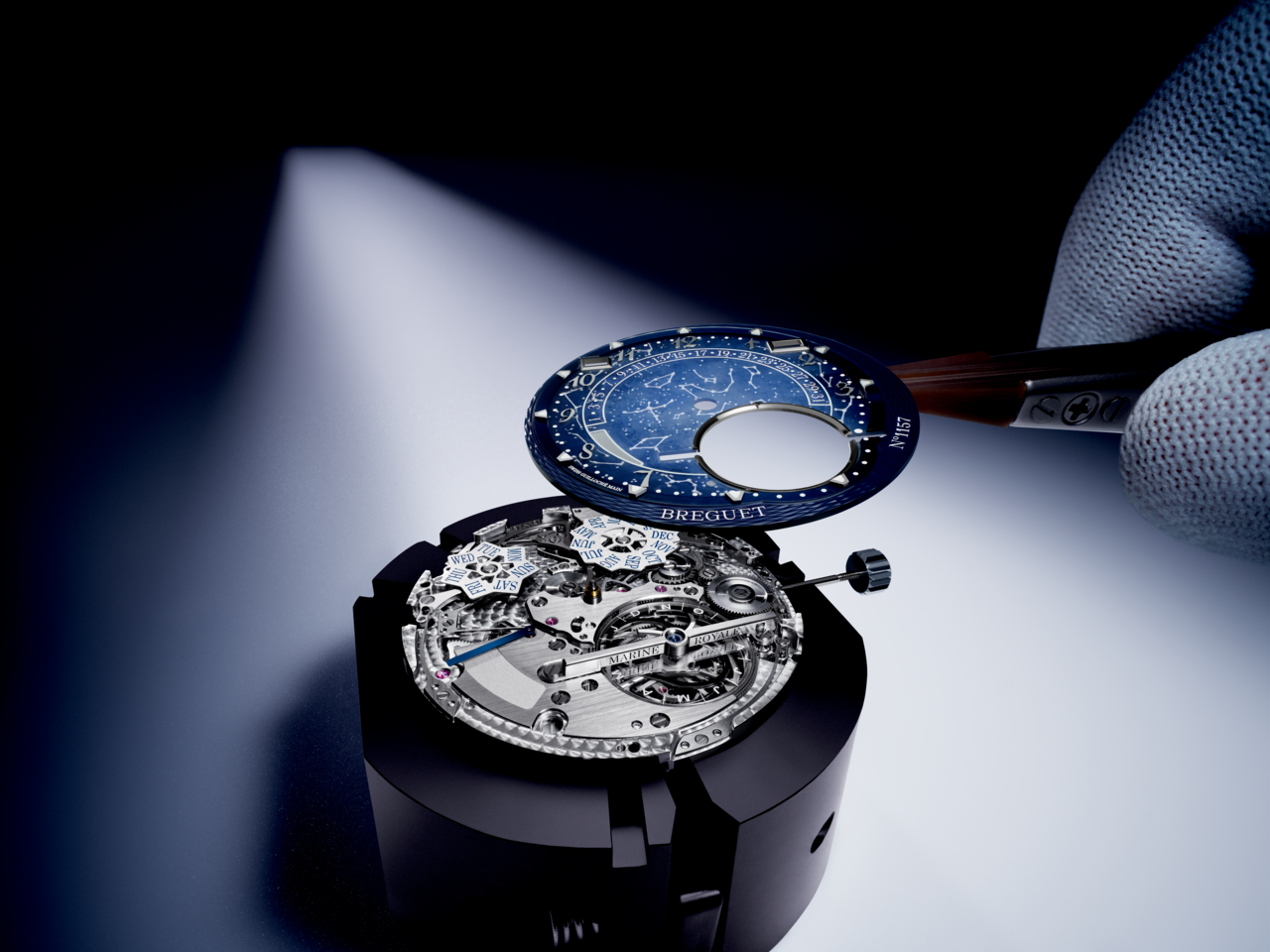
Breguet, Métiers d’Art.
In 1801, Abraham-Louis Breguet patented an invention that would become one of the defining achievements of mechanical watchmaking: the Tourbillon.
Two hundred and twenty-five years later, the mechanism remains remarkably alive. What began as Breguet’s pursuit of greater precision has transcended its original purpose to become one of the most fascinating expressions of mechanical ingenuity in Haute Horlogerie, interpreted not only by Breguet but, over time, by watchmakers around the world. To mark the 225th anniversary of the patent, Breguet is celebrating the Tourbillon throughout 2026 with a series of exceptional creations. This October, the story comes to Paris. From 7–20 October, as part of its worldwide presentation tour, the Tourbillon collection will make a stop at the Maison’s Place Vendôme boutique, offering collectors a rare opportunity to explore the evolution of an invention that began more than two centuries ago.
For Alta Quota, this anniversary also offers an opportunity to look beyond the complication itself: at the extraordinary mind that conceived it, the science behind it, and the way an invention born in 1801 continues to inspire contemporary watchmaking.
An Invention Born from the Pursuit of Precision
Abraham-Louis Breguet was not simply a watchmaker. Born in Neuchâtel in 1747 and arriving in Paris as a teenager, he combined the skills of a craftsman with an unusually deep understanding of mathematics and physics.
By the time he established his workshop on Paris's Île de la Cité in 1775, his reputation was already beginning to reach Europe's most influential circles. His watches would eventually attract clients including Louis XVI and Marie-Antoinette, while his innovations established him as one of the most important figures in the history of watchmaking.
Precision, however, remained an obsession.
Breguet understood that gravity affected the regulating organs of a watch differently depending on the position in which it was held. He could not eliminate gravity, but he believed he could compensate for its effects.
His solution was ingenious: place the regulating mechanism, including the balance and escapement, inside a rotating cage. As the cage turned, positional errors could be averaged rather than continuously acting in the same direction.
On 26 June 1801, Abraham-Louis Breguet was granted the patent for what he called the “Régulateur à Tourbillon.”
Interestingly, the name itself reveals something about its creator.
“Tourbillon” did not originally evoke the modern idea of a violent whirlwind. In the scientific and philosophical language of Breguet's time, the word was associated with astronomy: the rotation of planetary systems and the forces thought to govern celestial bodies.
For a man of the Enlightenment, a mechanism in which the regulating organs revolve with the regularity of planets was an appropriate name. A tiny mechanical universe had been created inside a watch.
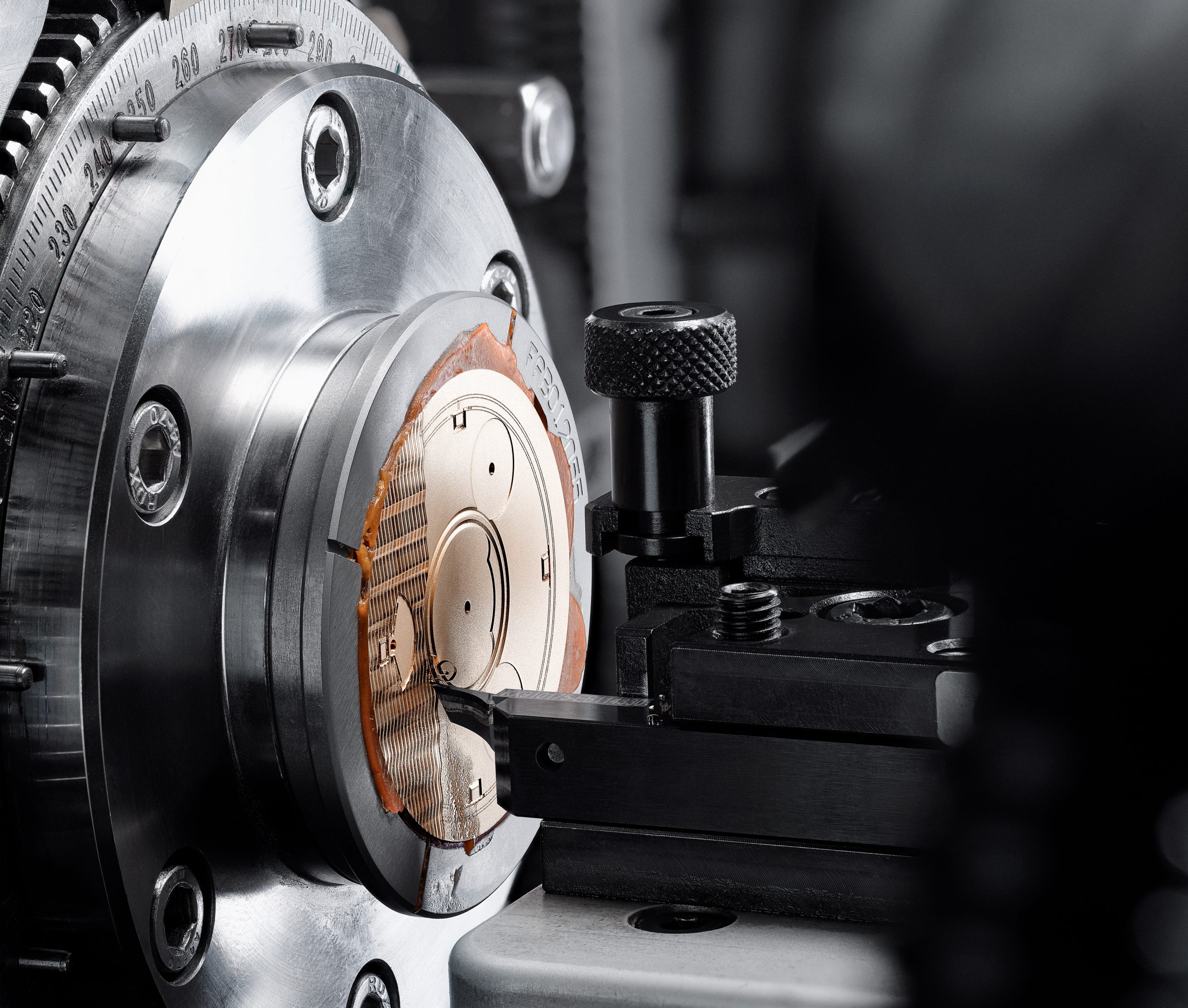
Breguet, guilloché work on the Classique 7235.
225 Years of Reinvention
What makes the Tourbillon particularly remarkable is not simply that it survived, but that it continues to evolve.
Technical inventions rarely remain relevant for more than two centuries. Yet Breguet's 1801 principle became part of the vocabulary of Haute Horlogerie. The original patent lasted only ten years, allowing subsequent generations of watchmakers to study and reinterpret the concept.
Breguet itself has never stopped exploring it.
For the 225th anniversary, the Maison has used the Tourbillon not merely to revisit its past, but to demonstrate where mechanical watchmaking might go next.
Among the anniversary creations is the Classique Tourbillon Sidéral 7255, the Maison's first flying tourbillon. Its construction is also described as “mysterious”, creating the impression of a mechanism suspended within the watch.
At the other end of the spectrum lies Expérimentale 1,the first chapter of a new collection dedicated specifically to Breguet's Research & Development innovations.
The watch introduces Breguet's first high-frequency 10 Hz magnetic-escapement Tourbillon, with constant force transmitted to the balance. Rather than placing the technology inside an existing family, Breguet has created an entirely new experimental platform around it.
The contrast is fascinating: an invention patented in Paris in 1801 being used, 225 years later, as the foundation for some of the Maison's most advanced research.
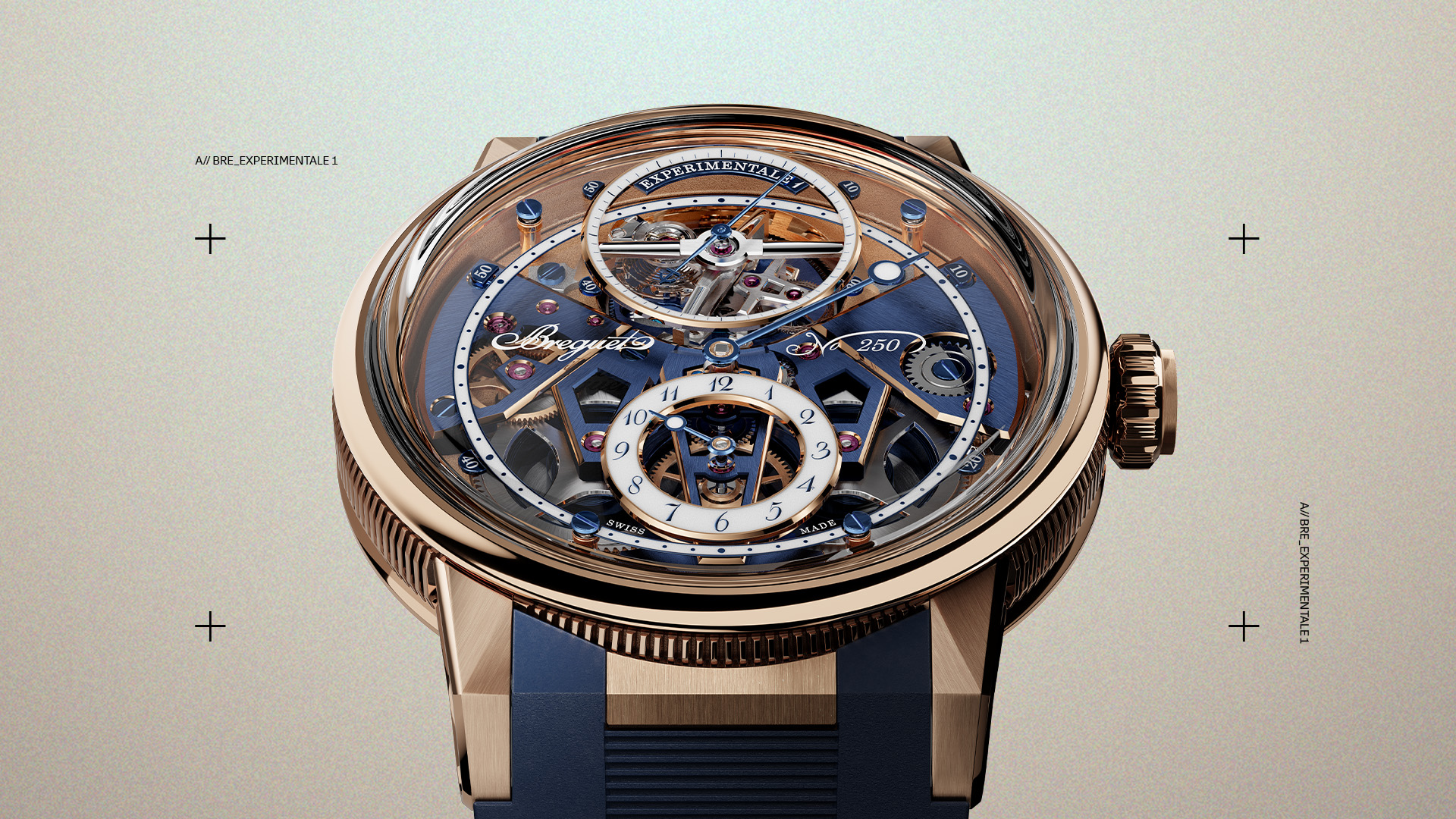
Breguet, Experimental Collection 1.
A History Written Through Its Owners
Perhaps the most captivating way to understand Breguet, however, is through the people who have worn its watches.
The history of the Maison intersects with European history itself. Its clientele over the centuries has included royalty, political leaders, military figures, artists and some of the most influential personalities of their time.
Marie-Antoinette became one of the names most closely associated with Breguet's early history. Napoleon Bonaparte acquired Breguet timepieces before his Egyptian campaign. More than a century later, Winston Churchill was another notable owner.
Behind these celebrated names lies something particularly unusual: the archives.
Breguet has preserved historical records that allow individual watches and commissions to be traced through generations. Original registers and documents transform an object into something closer to a historical witness: connecting a watch, its owner and a particular moment in time.
And it is precisely this less visible side of Breguet that Alta Quota readers will have the opportunity to discover in Paris this October.
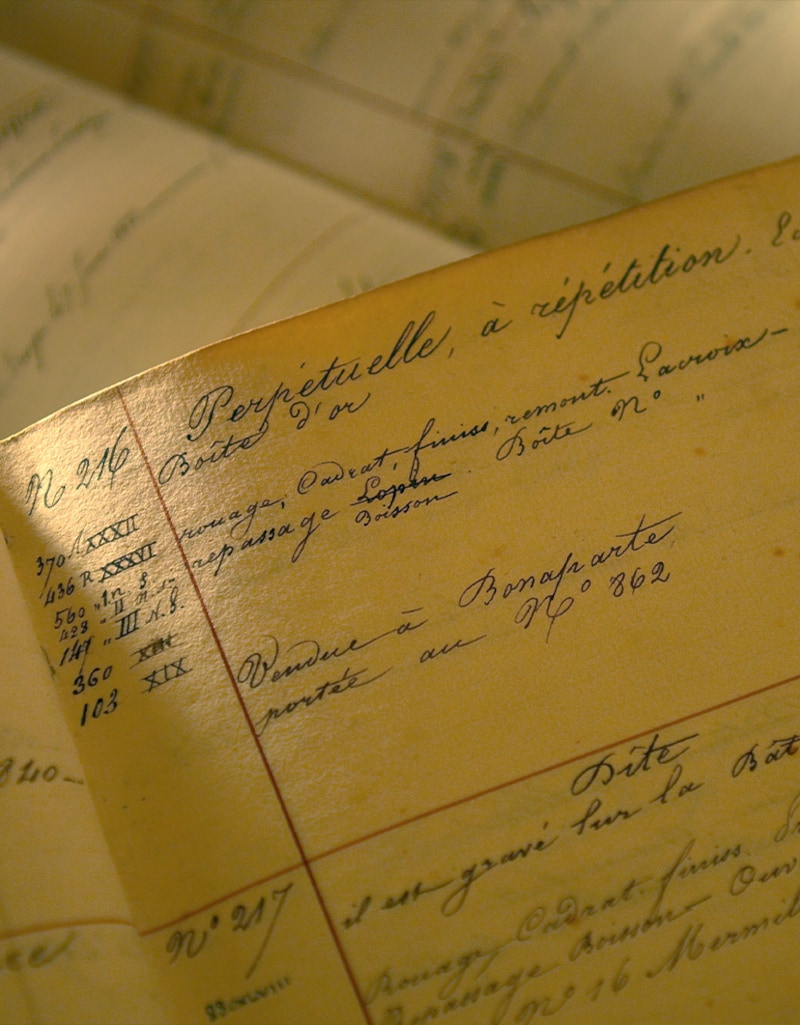
Breguet, The Maison’s Registers, Dating Back to 1775.